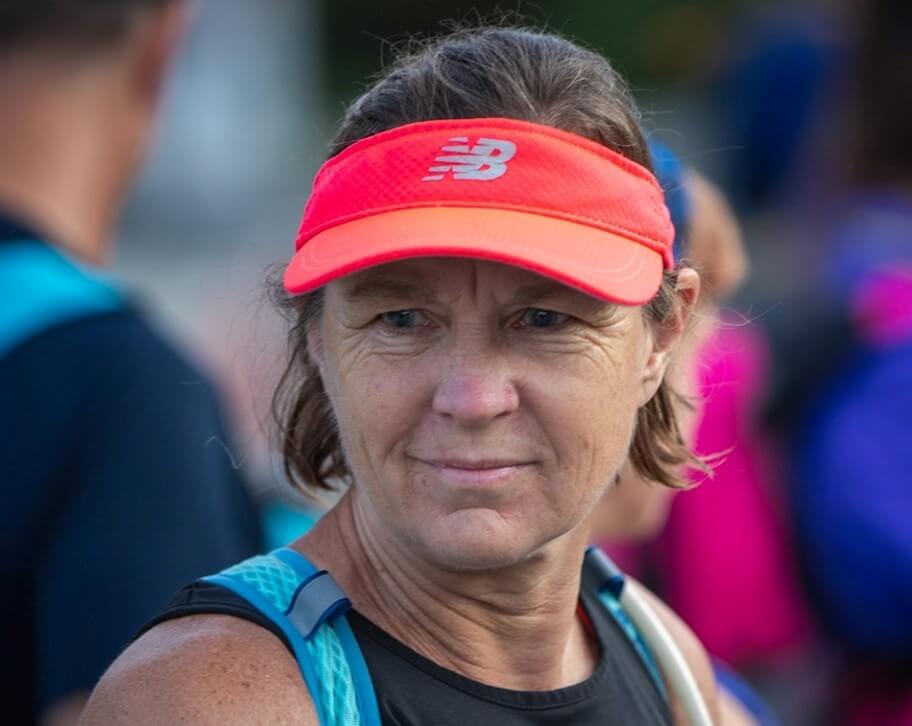
Liz Durant was unstoppable.
She packed 25 marathons into eight years before advancing to ultra-marathons—all while juggling a demanding career in accounting and finance, raising three kids, moving frequently, and squeezing in some competitive tennis, too.
At 45, Durant was offered a job as a personal trainer at a local gym. She decided to take it, jumping at the chance to share her love of running in a meaningful and purposeful way.
She dove headfirst into her new hustle, working to gain expertise in nutrition (through the PN Level 1 and Level 2 Certifications), endurance, and women-specific coaching.
Any given week, she’d teach 10 group fitness classes; spend 20-30 hours training in-person and online clients; train for her next race; chip away at certifications and other continuing ed; and of course be there for her family and friends too.
By her early 50s, Durant noticed it was getting harder to meet the demands. Hot flashes kept her awake at night. Injuries became commonplace. Durant felt burned out, struggling to keep up with her schedule.
She came to accept that she was entering a new phase of life. With help from a coach, Durant made adjustments to her lifestyle and nutrition habits.
“I had to really assess what was essential, and let go of some things that were not,” Durant says. “I practiced balancing my clients with my own training needs, and prioritizing my ‘big rocks’—sleep, stress, movement, and food.”
Before too long, Durant was back to feeling good and crushing her schedule.
And that’s how it hit her.
She would focus her coaching business, Affinity Fitness, on women just like her: 50-somethings who want to maintain an active, busy, healthy life, even while dealing with the realities of aging.
And that’s how she ended up finding her niche as a nutrition coach. Here are four illuminating lessons Durant learned from her experience—plus tips for you to try, too.
Lesson #1: Make it personal.
The more intimately you understand what your clients are up against, the more effectively you can support them.
Durant knew: “The 50s are a perfect storm of physical and lifestyle changes.”
Here are her clients’ top challenges, plus how she targets them.
It’s been a while since they prioritized themselves.
Many women in their 50s have spent years or decades caring for others, losing touch with their own bodies and needs in the process. (Durant has also found preliminary research on disordered eating and empty nest women, which aligns with anecdotal evidence from her coaching practice.)
Durant helps clients practice listening to their bodies, so they can relearn signals like hunger and fullness cues.
They’re experiencing hormone changes.
As a result, many clients notice decreased energy.
“Performance and training start to suffer,” Durant notes. “Then your sleep is disrupted because of hot flashes. Plus, you’re more prone to injury.”
To address this, Durant helps clients adapt training and recovery to their bodies’ evolved needs. She also focuses them on improving sleep and managing stress by shutting off screens and winding down earlier in the evening than they’re used to.
Day-to-day life suddenly looks different.
Women this age are often experiencing significant life adjustments (becoming an empty nester; retiring). This means disrupted eating and exercise patterns.
Durant helps clients get a balance of lean protein, smart carbs, healthy fats, and veggies—often portioned for a slowed metabolism. (Hint: She uses the PN Macro Calculator. “The report that comes out of that is gold.”)
And Durant coaches them on a big takeaway from her own experience: “Being nimble is key. Don’t beat yourself if you need to re-prioritize your life to fulfill your basic needs. Progress, not perfection.”
Save $300 on the industry's top nutrition certification
Our biggest price drop of the year. Learn to help anyone eat better and get lasting results, whether you're starting a coaching career or leveling up the one you have. Ends Friday.

Lesson #2: Specialize even within your specialty.
The clients in a given market or niche will have things in common, but it’s important to leave room for personal preference.
For example, while some of Durant’s clients love training online, “others have looked forward to getting back into the gym.”
To accommodate both groups, Durant offers online, limited in-person, and hybrid coaching models.
“I have several clients who travel south in the winter. We train in the gym when we can, and when we can’t, we use Zoom. My clients love the consistency and flexibility,” she says.
Meanwhile, Durant offers three different packages:
- Sprint: Program design with just a bit of support
- Marathon: Program design with individualized nutrition support
- Ultra: Program design, customized nutrition recommendations, and a weekly Zoom training session
“It’s all about finding what works best for individual clients.”
Lesson #3: Listen to your audience—not everybody else.
When Durant was getting her coaching business off the ground, she tried Facebook ads to get visibility. It’s standard marketing, but it didn’t work.
So, she thought more carefully about the women she wanted to coach. What are they interested in? How do they spend their time? What would be of real value to them?
It hit her like a sack of potatoes: Just like Durant, her clients were huge fans of the Instant Pot. She’d been running free workshops at the local library, plus paid sessions in clients’ homes. Why not take it to Facebook Live to get more folks interested in what she had to offer?
Liz started doing free sessions on meal planning and prep, plus recipe demos right from her kitchen. Immediately, she had an influx of new clients.
“It’s been awesome!” Durant says. “So much so, I am considering developing an online course on the Instant Pot for runners. Simplify their lives and give them more time to run!”
This kind of approach can take some experimentation, Durant warns—but it helps to keep an open mind. “Throw something at the wall and see if it sticks. Try something for a month and see what happens,” she suggests.
Lesson #4: Think about the change YOU want to make.
Durant says specializing has helped her get clients, especially by word-of-mouth. But much more than that, it’s brought a clear sense of purpose and meaning to her work.
“I love helping women take care of themselves after they’ve spent so long taking care of others,” she reflects.
And for Durant, this mission has opened the door to a more large-scale vision: “I feel like there’s a notion in my generation that a big part of our purpose is to care for other people, even at the expense of our own health,” she says. “I want to change that.”
Durant—who’s now 59— believes we’re on the verge of a societal shift, where women of all ages are becoming more willing to prioritize themselves, and topics like menopause are becoming less taboo.
“Women are starting to understand that self-care isn’t selfish. And besides, when we take the time to prioritize our own wellbeing, we are more effective at taking care of others anyway!”
Clients pick up on this sense of purpose. They begin to envision a new future for themselves, too. They get results. They tell their friends.
“When we’re north of 50, we have an opportunity to create a new blueprint for ourselves,” says Durant. A new vision we can choose to think of as me, 2.0.”
With this new vision in mind, Durant is leading the way.
If you’re a coach, or you want to be…
You can help people build sustainable nutrition and lifestyle habits that will significantly improve their physical and mental health—while you make a great living doing what you love. We'll show you how.
If you’d like to learn more, consider the PN Level 1 Nutrition Coaching Certification. (You can enroll now at a big discount.)

Share